Why Your Planogram is Leaking Profit (and How to Fix It)
James and I often spend our Friday afternoons doing what we call "shelf-watching." We’ll pop into a few local retailers near our Leicester facility, not just to pick up a bit of lunch, but to see how brands are actually faring on the shop floor.
It is a sobering experience. You see premium brands—companies that spend millions on marketing and product development—relegated to a cardboard FSDU that’s currently leaning at a 15-degree angle. Half the stock is pushed to the back where nobody can see it, and the header card is hanging off.
This isn't just a bit of a mess. It is a massive financial leak. If you are a brand manager or a retail buyer, you’ve likely spent months perfecting a planogram that looks brilliant on a screen. But the reality on the ground is often a different story entirely.
The Cost of the "Friday FSDU Lean"
The numbers behind this are staggering.
Recent industry analysis shows that average planogram compliance across the retail sector hovers around just 60%. Even more concerning is that this compliance can deteriorate by up to 10% every single week without intervention.
When your planogram fails, your sales follow. It has been shown that a 10% drop in compliance correlates directly with a 1% increase in out-of-stock levels.
That is money left on the table simply because the product isn't where the customer expects it to be.
At Vertical Vendors, we’ve always believed that the display unit shouldn't just be a "holder" for the product; it should be a guardian of the brand.
When a cardboard unit gets wet from a floor buffer or crushed by a passing trolley, your planogram integrity disappears instantly.
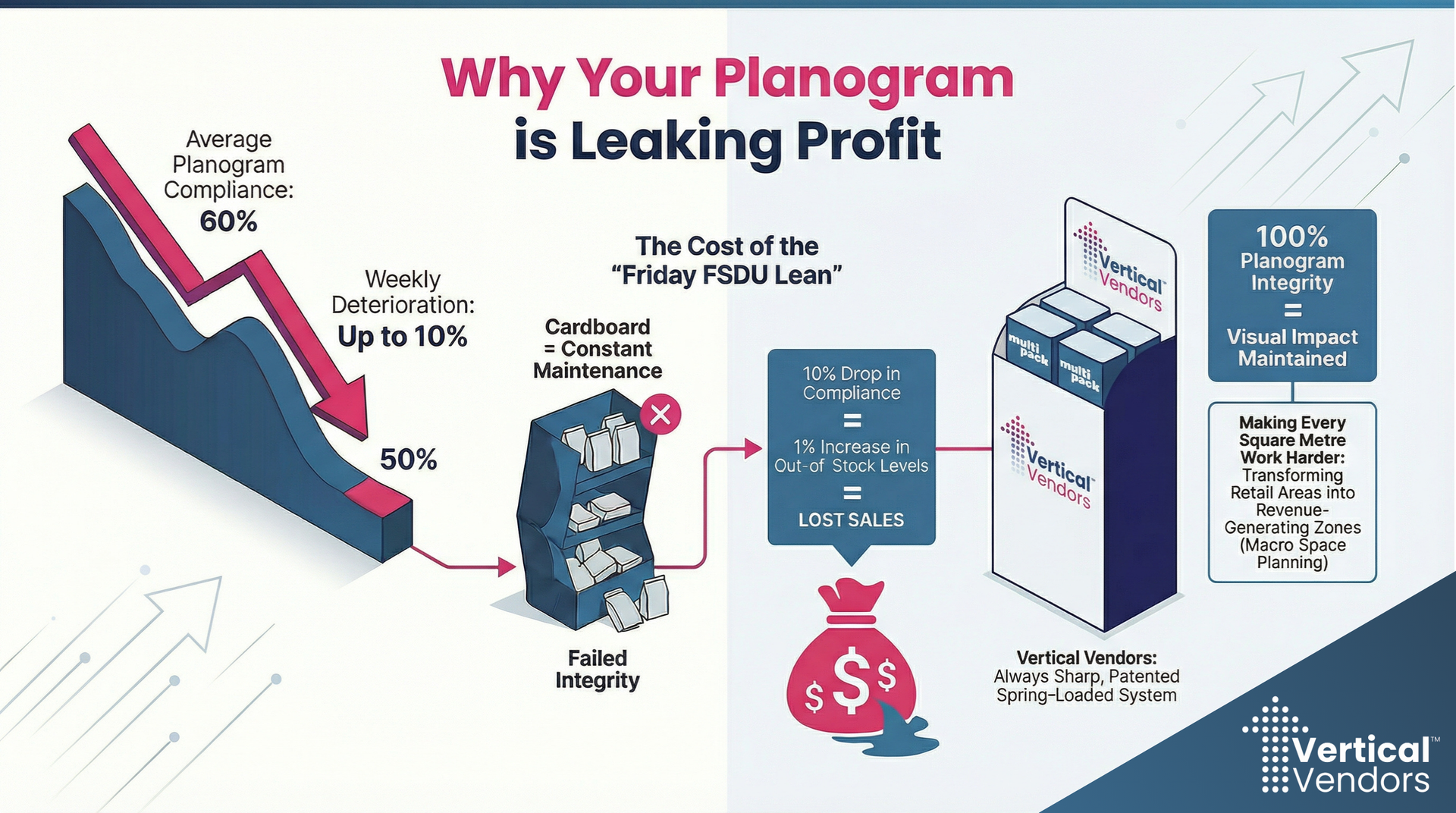
Making Every Square Metre Work Harder
With footfall growth remaining flat across much of the UK, the focus for 2026 has shifted heavily towards "Macro Space Planning."
Retailers are under immense pressure to extract more commercial value from every single square metre of the store floor.
As the team at CADS recently noted:
"Macro space planning is essential to transform key retail areas into revenue-generating zones."
This is where the Megavendor comes into its own.
Most temporary displays are treated as an afterthought—something to be shoved into a corner. Our units are designed as permanent retail assets. Because they are manufactured from robust sheet metal in our Wigston facility, they hold their ground.
They don't lean, they don't look "tired," and they ensure that your premium secondary placement stays exactly where it was intended to be.
Why "Always Sharp" Beats "Disposable"
The problem with the traditional "buy it cheap, bin it fast" mentality of cardboard displays is that it creates a cycle of constant maintenance.
Store staff are already stretched thin.
They don't have the time to be constantly "fronting up" shelves or fixing saggy cardboard.
Our patented spring-loaded systems solve this through what we call "passive automation." As a customer grabs a can or a bottle, the next one is immediately pushed up to the front.
The shelf stays "always sharp" and pristine without a member of staff having to touch it.
This is a huge win for planogram integrity. If the product is always at the front of the unit, the visual impact of your planogram is maintained 100% of the time. You aren't relying on a busy shop assistant to make your brand look good; the unit does the work for you.
Manufacturing Precision in the Heart of England
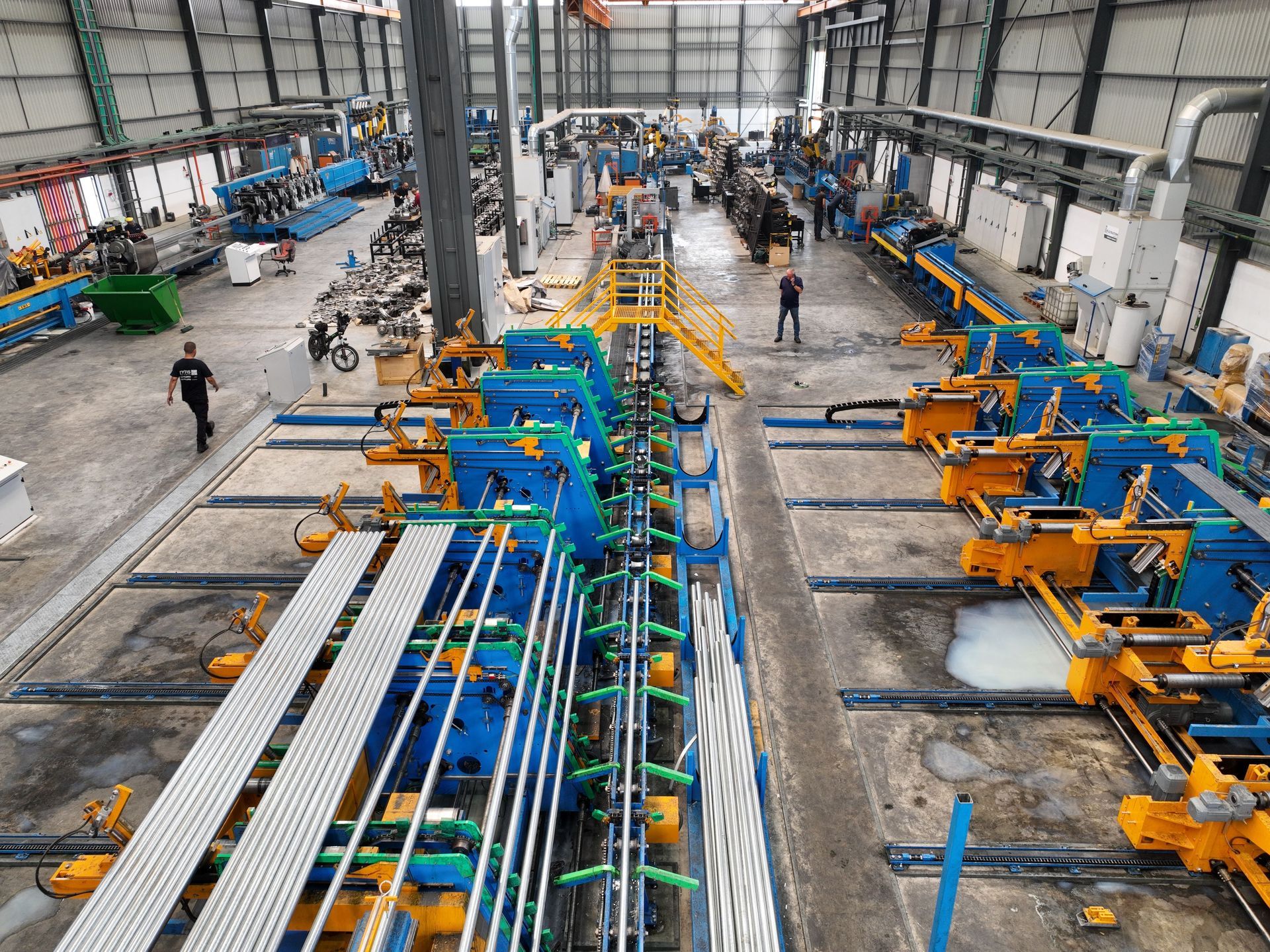
We are incredibly proud to be a UK manufacturer. Operating to ISO 9001 standards at our facility near Leicester isn't just about a badge on the wall; it’s about the precision of the engineering.
We’ve seen many brands struggle with units that arrive only to find the dimensions are slightly off, or the material isn't robust enough for the British retail environment.
By keeping our production close to home, we ensure that every unit that leaves our floor is built to last a decade, not a week. We’ve seen units using our technology that have been in-store for over 10 years and still look as good as the day they were installed. T
hat is the difference between a "disposable" mindset and a "durable" strategy.
From Lost Sales to Fixed Assets
If your current retail strategy involves crossing your fingers and hoping the cardboard holds up until the end of the promotion, it is time for a rethink.
Retailers and brands are losing 3–5% of their yearly profits simply due to poor shelf execution and non-compliance.
The shift towards steel isn't just a sustainability play—though our units are 100% recyclable. It is a commercial decision. It is about taking back control of your brand’s physical presence and ensuring that the planogram you worked so hard to create actually survives the reality of a busy Friday afternoon in-store.
Get In Touch Today
If you are ready to stop the profit leak and move toward a more robust, "always sharp" retail presence, we’d love to chat. We can help you transition from flimsy temporary fixes to permanent, high-impact retail assets that deliver a measurable return.
Find out how we can support your next rollout.
More from the blog