Results Day Confirms the UK's Engineering Skills Gap Isn't Closing
This year's T-Level and A-Level results, published August 2026, show engineering entries up 46% year on year, the fastest growth of any T-Level subject.
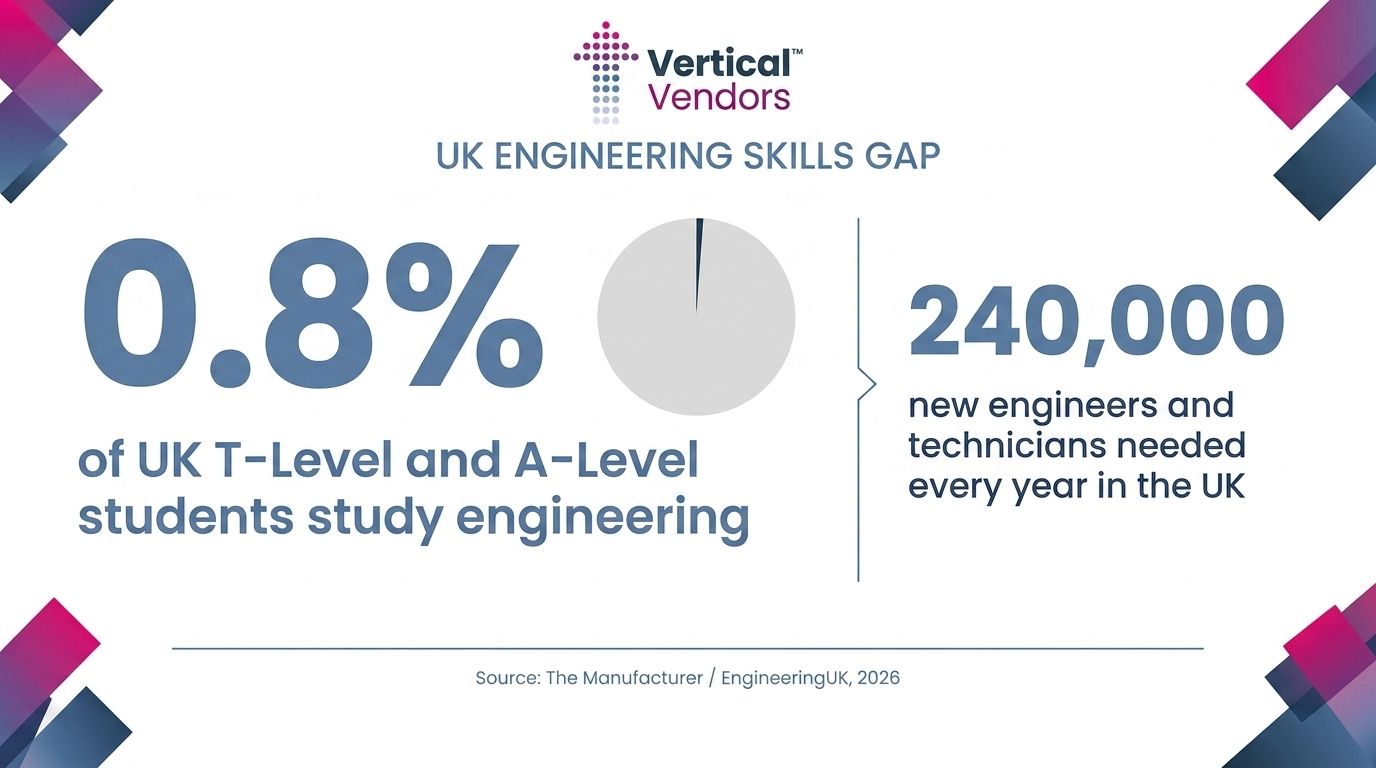
It sounds like good news until you see the base it's growing from: engineering and technology T-Levels still make up just 0.8% of all T-Level and A-Level entries nationally, against an economy that needs roughly 240,000 new engineers and technicians every single year
For a subcontract sheet metal manufacturer like us , that gap isn't a policy headline. It's the reason every skilled fabricator, welder and CNC operator on our shop floor in Leicester matters more than the last one, and the reason we think brands ordering steel POS displays should care who's actually making them.
How Many New Engineers Does the UK Need Each Year?
The UK needs approximately 240,000 new engineers and technicians annually to sustain a sector that already accounts for 33% of the country's economic output. Engineering employs 8.5 million people across roughly 685,000 businesses (The Manufacturer).
That's not a niche corner of the economy. It's the base layer underneath retail, construction, automotive and, closer to home, the steel and sheet metal fabrication that turns a brand's display brief into a unit standing on a shop floor.
The shortage isn't evenly spread across every "engineer."
It's sharpest in the practical, hands-on trades: welding, precision laser cutting, CNC machine setting, and the kind of spring-mechanism assembly work that a spring-loaded POS unit actually needs.
Those are the roles a T-Level and an apprenticeship feed directly, and they're also the roles that don't get filled by a generic office-based engineering degree.
Are More Students Actually Choosing Engineering Routes?
Yes, but from a small starting point. Engineering and technology T-Level entries rose 46% this year to 8,307 students, and university engineering acceptances climbed 14% to 34,100. Both are genuinely encouraging numbers.
Set against the scale of the shortage, though, they're still early steps. As Dr Ian Ritchey OBE FREng, Chair of the Royal Academy of Engineering's Education Committee, put it: "Upward trends over the last decade are not nearly enough to address engineer shortages" (source).
Women remain 13% of engineering T-Level students and 17% of the workforce overall, so the pipeline problem is also a representation problem.
The wider feeder subjects are moving in the right direction too. A-Level entries rose across the board in the STEM subjects that lead into engineering: maths (+3.9%), further maths (+8.5%), design and technology (+2.8%) and physics (+1.9%).
Becca Gooch, Head of Research at EngineeringUK, attributed part of the growth specifically to girls' increased uptake of computing and D&T, which matters given how thin female representation still is further down the pipeline.
There's also a structural point worth making. Kate Ambrosi, CEO of the Baker Dearing Educational Trust, pointed out that half of all University Technical Colleges had no NEETs (young people not in education, employment or training) among their 2025 leavers, and a quarter never have.
Technical education routes that put students in front of real machinery and real employers early are, on this evidence, doing exactly what they're supposed to do. There just aren't enough students on them yet.
Why Does a National Skills Shortage Matter to Brands Ordering Shop-Floor Kit?
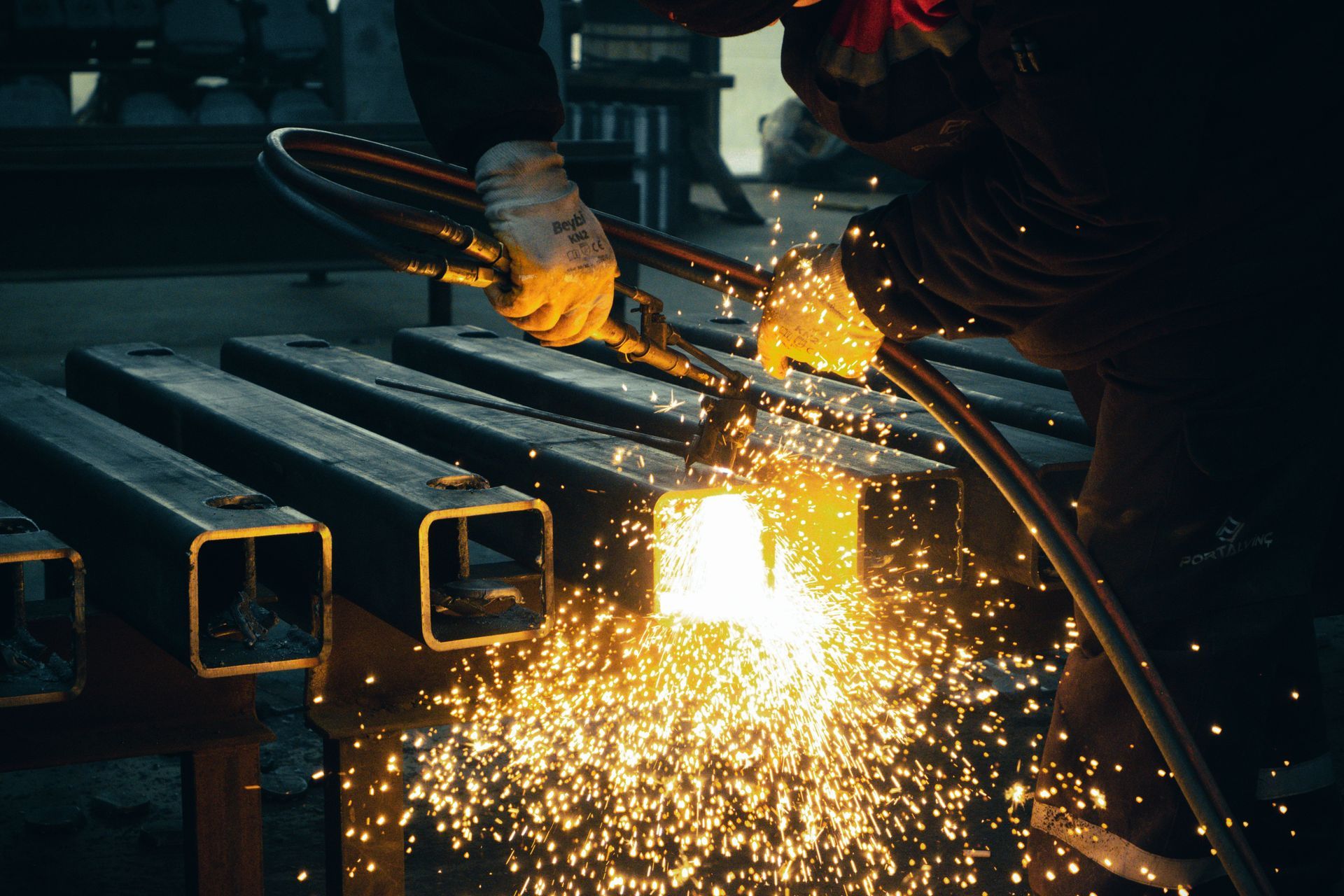
Every steel display unit a brand orders starts with a welder, a laser cutter operator and a fabricator who knows sheet metal properly, not a machine running unsupervised.
When the national pool of people qualified to do that work shrinks relative to demand, the manufacturers left standing are the ones who've already invested in keeping skilled trades in-house.
That's the practical link between a results-day headline and a brand's lead time. A supply chain built on scarce, in-demand skills is a fragile one, and it's a theme we've written about before when looking at how automation and youth employment intersect in UK retail more broadly, worth a read if you're thinking about where your own supply chain sits on that spectrum: our piece on youth unemployment and retail automation.
In practice, a properly made steel POS unit depends on several distinct skilled trades working together:
- Laser cutting - precision cutting of sheet steel to spec, run by a trained operator, not a fully unattended process.
- Welding - structural joins that need to survive years of retail handling, restocking and transit.
- Spring and mechanism assembly - the self-facing, spring-loaded systems that keep product fronted need someone who understands the mechanics, not just the metalwork.
- Quality control - checking tolerances against ISO 9001 certified processes before a unit ever leaves the factory.
Lose depth in any one of those trades and lead times slip, tolerances drift, or both.
What Is Metalfacture Doing About It?
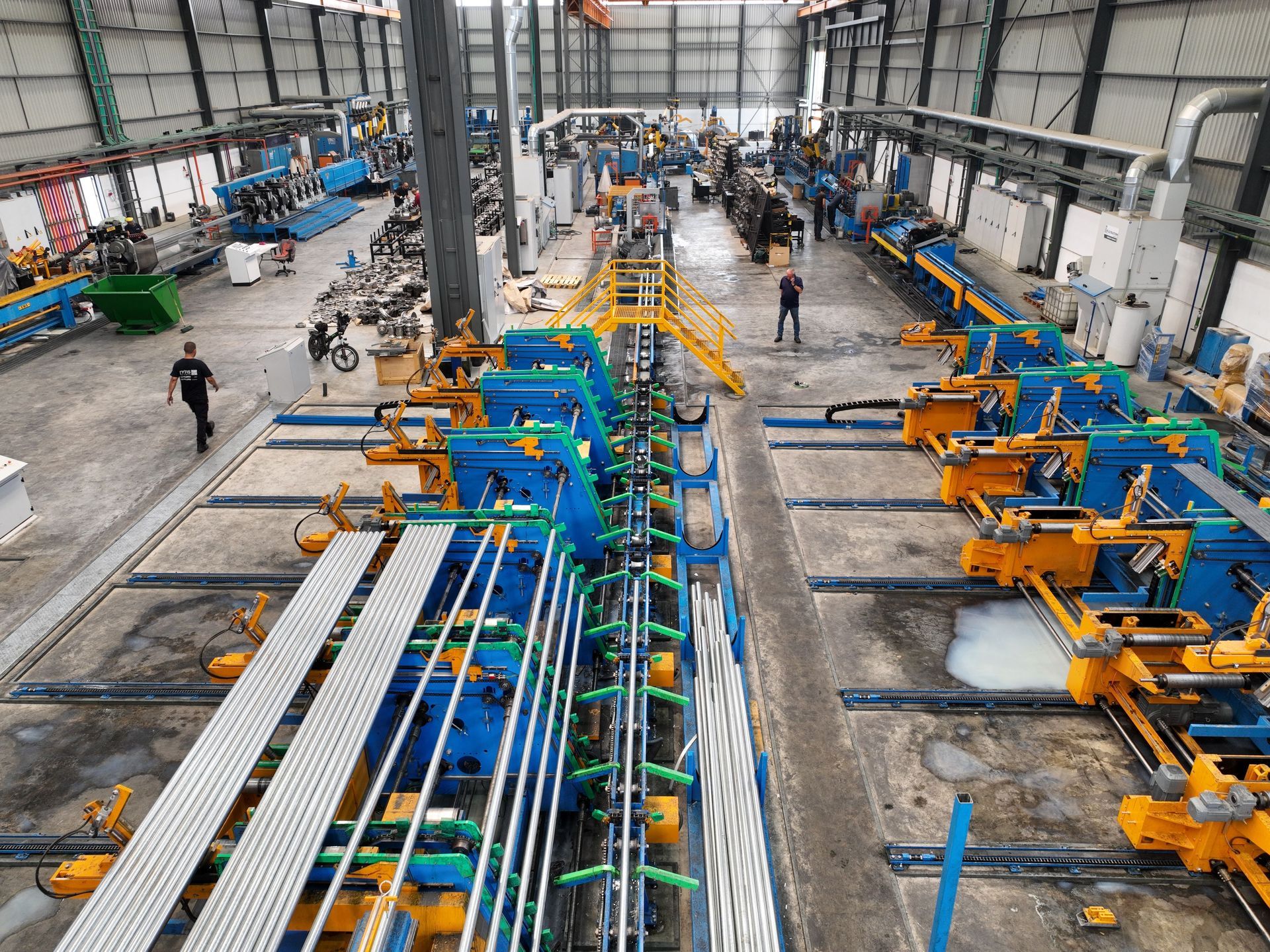
We've built our business on keeping engineering skills inside the factory rather than outsourcing them. Every unit that leaves our Leicester site, from a standard 24-pack display to a bespoke MegaVendor, passes through people who've trained specifically on our own kit, including the Bystronic laser cutting line we run on-site.
In practice, that has meant backing the apprenticeship route rather than just talking about it. Over the past few years, two of our fabricators joined Metalfacture through an apprenticeship with Leicester College and are now full-time members of the team, exactly the kind of homegrown pipeline a 240,000-a-year shortfall needs more of.
We're not going to pretend two apprenticeships solve a shortfall that size. What we can say honestly is that we treat fabrication, welding and CNC operation as skilled trade roles worth building a career around, not entry-level filler, because that's the only way a British manufacturer stays reliable when the labour market is this tight.
If you want the fuller story of how our sheet metal business ended up shipping displays worldwide, we've told it here: From Leicester to the World.
FAQ
What is a T-Level, and why does results day matter for manufacturing? A T-Level is a two-year technical qualification, equivalent in size to three A-Levels, combining classroom study with an industry placement. Engineering and manufacturing T-Level results are watched closely because they're one of the clearest early signals of how many technically qualified young people will enter the sector over the next decade.
How does the UK's engineering skills gap affect lead times for retail display orders? When skilled fabricators, welders and machine operators are in short supply nationally, manufacturers without an established, trained workforce face longer lead times and greater quality risk. Brands ordering from a manufacturer that has invested in retaining and training its own skilled staff are better insulated from that volatility.
What percentage of UK T-Level and A-Level students study engineering? Just 0.8% of all T-Level and A-Level entries in 2026 are in engineering and manufacturing subjects, despite the sector needing around 240,000 new engineers and technicians every year (The Manufacturer).
Where does Metalfacture manufacture its displays? Metalfacture manufactures from its own site in Leicester, UK, using in-house sheet metal fabrication, laser cutting and welding rather than subcontracting production overseas.
Does Metalfacture run an apprenticeship scheme? In recent years, two of Metalfacture's fabricators joined the business through an apprenticeship with Leicester College and are now full-time members of the team.
Get In Touch
If you're a brand or retailer thinking about who's actually going to be cutting, welding and assembling your next display order, and whether they'll still be doing it reliably in five years' time,
get in touch with the team.
More from the blog