The Weather Doesn't Read Your Planogram
In short: NielsenIQ's latest UK figures show shoppers "failing to make the transition to autumnal spending". In the four weeks to 3 October, mineral water sales rose 17.4% and soft drinks 12.9%, while hot chocolate fell 11%.
Stores reset to autumn on the calendar; shoppers kept buying summer.
Brands with a fixed, restockable display in store could follow demand.
Brands relying on a seasonal cardboard unit mostly couldn't.
What did UK shoppers buy in September 2026?
UK shoppers kept buying summer products well into autumn. NielsenIQ's Total Till data for the four weeks to 3 October 2026 shows mineral water up 17.4%, soft drinks up 12.9%, ice cream up 11.7% and suncare up 8.6% year on year.
The autumn staples went the other way.
| Category | Change, 4 weeks to 3 Oct 2026 |
|---|---|
| Mineral water | +17.4% |
| Soft drinks | +12.9% |
| Ice cream | +11.7% |
| Suncare | +8.6% |
| Hot beverages | -2.8% |
| Ambient soup | -5.4% |
| Hot chocolate | -11% |
| Organic fresh food | +4.7% (versus +1.9% overall) |
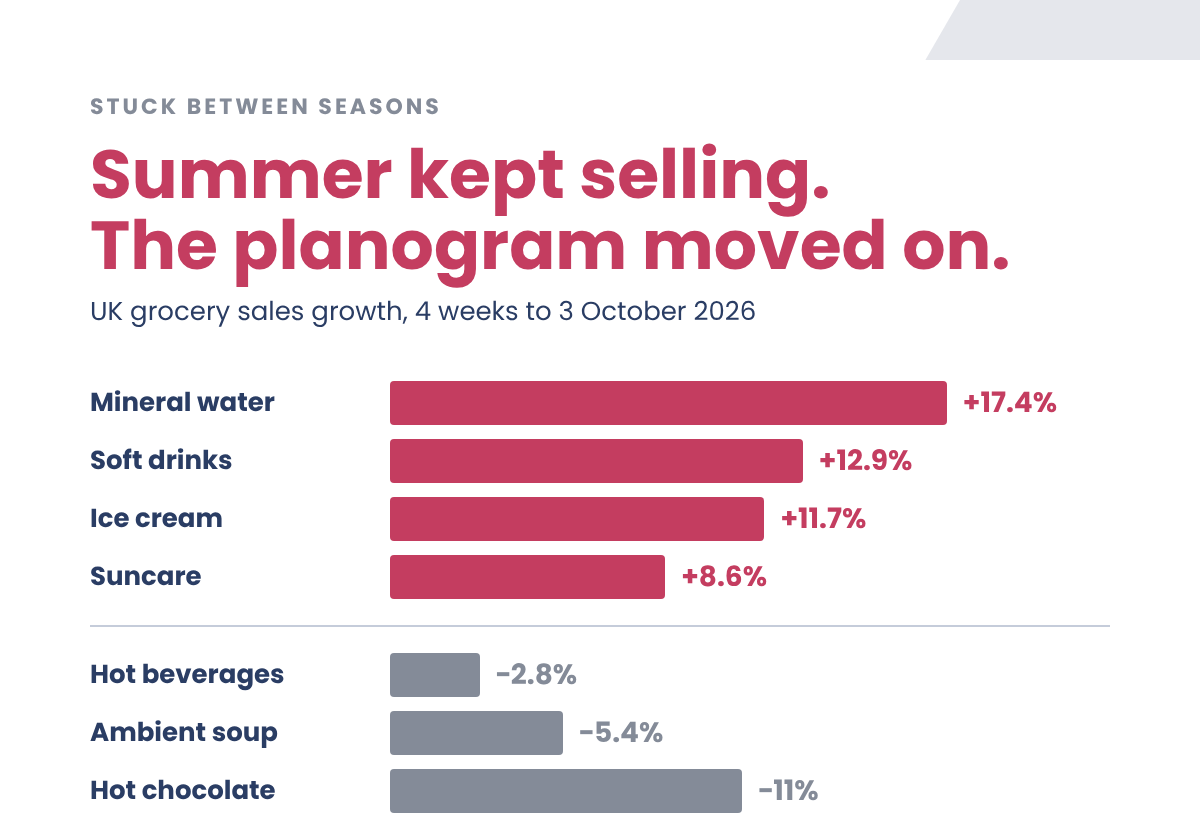
Source: NielsenIQ Total Till, published 13 October 2026.
Mike Watkins, Head of Retailer and Business Insight at NielsenIQ, put it plainly: "September is always a challenging month for food retailers", and the weather "also contributed to shoppers failing to make the transition to autumnal spending."
Why does a late summer cost brands money?
Because store space moves on a schedule, and demand doesn't. Seasonal resets are planned months ahead. Once the autumn range lands, front-of-store space goes to soup, hot drinks and Halloween, so categories that are still growing can lose their best space just when they need it most.
The overall market is tight too. NIQ reports total grocery sales up just 1.4%, with unit sales almost flat at +0.1% and average spend per visit steady at £18.58. When volume is that flat, a drinks brand still growing at double digits can't afford to be stuck in the main aisle while the impulse spot by the till sells soup.
Why can't a cardboard display keep up?
A cardboard floor-standing display unit (FSDU) is printed, built and shipped for one campaign. Its graphics, its shape and often its product are fixed months before it reaches the store. When the weather changes the story, it can't be refilled with a different line or refreshed with a new message. It just gets flattened and binned.
That's the hidden cost of temporary POS. It doesn't only create waste at the end of a campaign. It also locks a brand into whatever the plan said in spring, with no way to react if September turns out warm.
What does a permanent display let a brand do instead?
A permanent steel display stays in store and gets reloaded with whatever is actually selling. If water is still flying out in October, the unit keeps carrying water. When the cold finally arrives, the same unit can take a winter multipack or a Christmas gift line without anyone ordering, printing or shipping a new fixture.
That flexibility comes from a few practical design choices:
- Patented spring-loaded systems. Product self-faces to the front as each can or pack is taken, so the display looks full and tidy between restocks, even during a sales spike.
- Consistent, stackable formats. Our MegaVendor takes four 24-pack modules on an 840mm x 580mm wheeled base, so it can be moved to wherever demand is in the store and refilled quickly.
- Branded headers and wraps. The unit carries the brand's own graphics, which can be updated for a new campaign while the steel stays put.
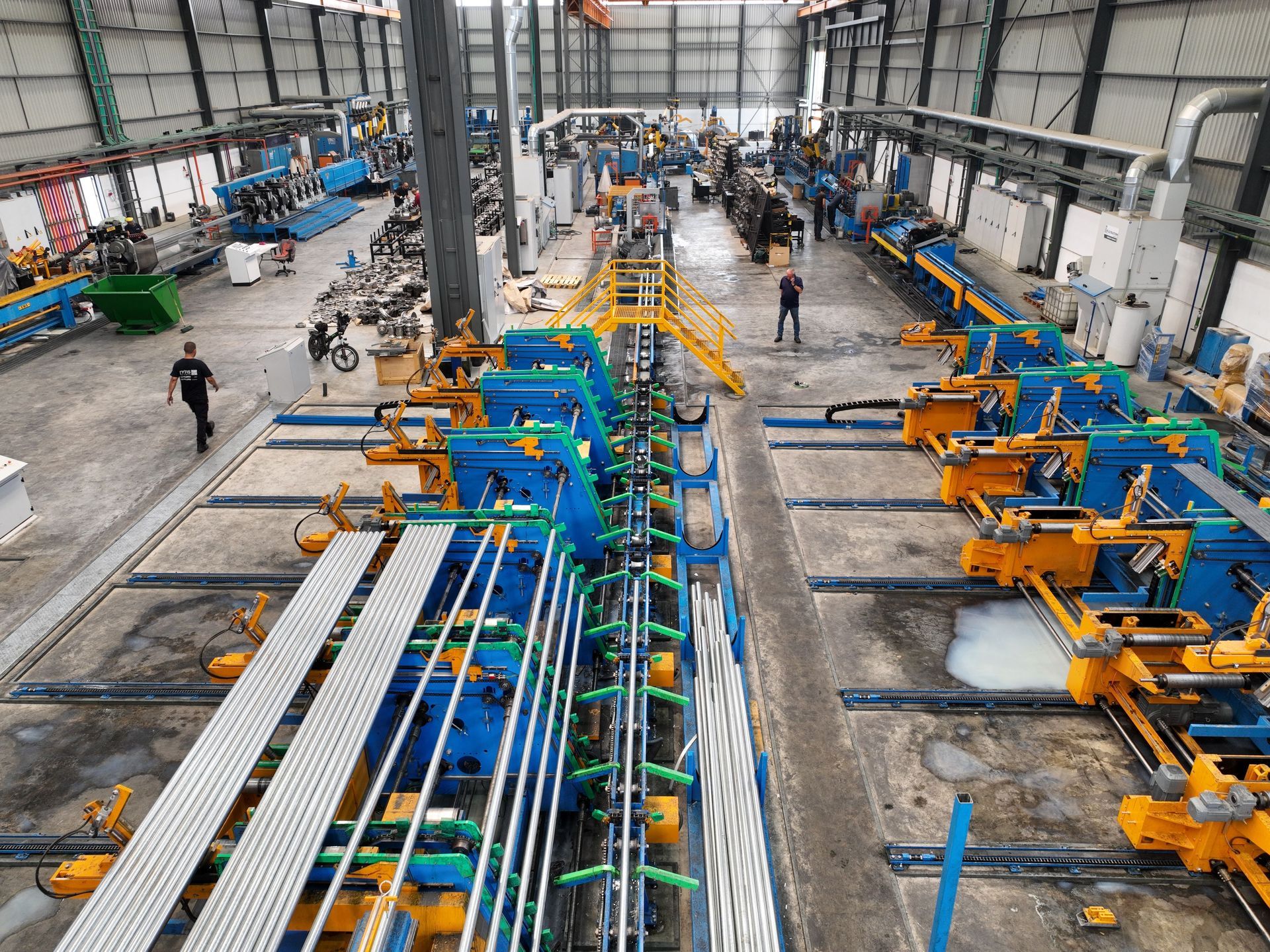
- Built to last. Robust sheet metal and a powder-coat finish made in our UK factory, designed for years of service rather than one season.
A permanent display can't change the weather. It does stop the planogram from deciding, months in advance, what the shopper is allowed to buy.
Does presentation matter when shoppers are this cautious?
Yes, and arguably more than usual. NIQ found that 55% of consumers would prefer something "clearly premium" if they do spend more, even while they stay careful with their money overall. A crumpled cardboard unit three weeks into a campaign doesn't say premium. A clean, fully faced steel display does.
Watkins also noted that "consumers remain concerned about their personal finances." In that mood, shoppers trade up selectively. They'll pick the brand that looks worth it at the moment they're deciding, and in convenience and impulse that moment usually happens at a display, not on a shelf at the back. We've written more about how messy merchandising erodes that in our post on why planogram compliance is a profit leak.
What should brands plan for this Christmas?
Plan for flexibility, not just a festive range. NIQ expects Total Till growth of up to 2.5% this Christmas, which is modest growth in a market where shoppers are switching between seasons, occasions and price points from week to week.
Brands that own a permanent spot in store can move with that.
Brands relying on a one-shot seasonal display are betting the forecast is right.
It's the same lesson we keep coming back to: the display that wins isn't the one that looked best in the planning meeting. It's the one still full, tidy and stocked with the right product when the shopper walks past.
FAQ
What is NielsenIQ Total Till? It's NielsenIQ's measure of total UK grocery market sales. The figures quoted here cover the four weeks to 3 October 2026.
Why did summer categories grow in September 2026? NielsenIQ linked the shift to the weather, saying it contributed to shoppers "failing to make the transition to autumnal spending". Water, soft drinks, ice cream and suncare all grew while hot drinks and soup declined.
Can a permanent POS display carry different products through the year? Yes. A steel display built around consistent pack formats can be refilled with a different line as demand changes, and its branded header can be refreshed for a new campaign without replacing the unit itself.
Get In Touch
If your range needs to follow the shopper rather than the calendar,
talk to us about a permanent display built in Britain.
More from the blog