Christmas 2026 Is Six Weeks of Small Shops, Not One Big One
Christmas 2026: Why Festive Shopping Is Many Small Shops
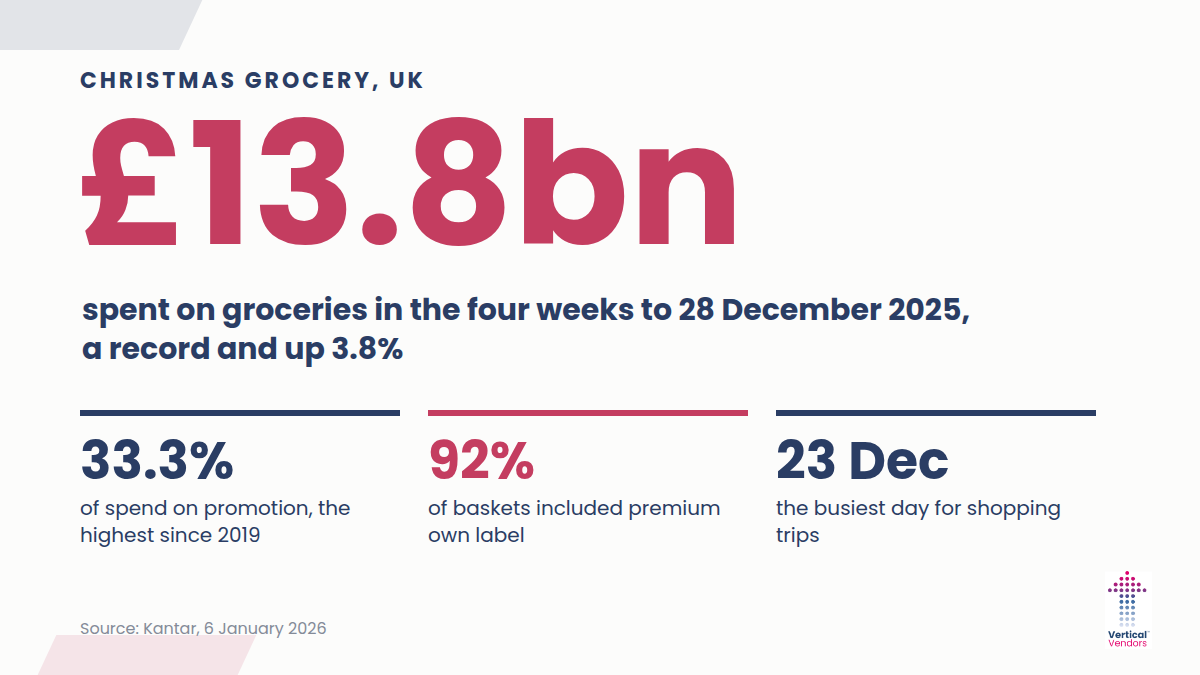
In short: Britain spent £13.8bn on take-home groceries in the four weeks to 28 December 2025, according to Kantar.
This year's supermarket ranges show where that money is heading next: not one big Christmas Day shop, but a run of smaller missions for office parties, "Friendsmas", gifting, Christmas Eve and Twixmas.
For brands, that means winning the shelf over and over, not just once...
What do the 2026 Christmas ranges tell us?
The big four have shown their hands, and the pattern is clear. As Grocery Gazette put it on 21 September, the festive battle now stretches well beyond Christmas Day, with ranges built around Friendsmas, office parties, gifting, Christmas Eve and Twixmas.
Sainsbury's alone has launched 330 new festive food and drink lines, and a good share of them are party and sharing products: sliders, prawn tartlets, sharing cocktails and a pigs-in-blankets wreath. These aren't Christmas dinner. They're the things people pick up on the way to somebody else's house.
James Campbell, Sainsbury's director of product and innovation, summed up the brief as "fantastic quality, distinctive flavours and effortless entertaining". Effortless entertaining is a repeat purchase, not a once-a-year one.
For convenience in particular, that's a tight margin for error. Convenience baskets are smaller and more impulse-led by nature, so when category growth is running close to flat, there's very little headroom left over from the market itself. Almost all of the remaining growth has to come from what's actually stocked, faced and visible on a small footprint, not from more people simply walking through the door.
How much did shoppers spend last Christmas?
Last Christmas set the bar high. Kantar's figures for the four weeks to 28 December 2025 show:
| Measure | Christmas 2025 |
|---|---|
| Take-home grocery sales | £13.8bn, up 3.8% year on year |
| Average spend per shopper | £476, £15 more than 2024 |
| Share of sales on promotion | 33.3%, up from 32% |
| Premium own label sales | Over £1bn for the first time |
| Low and no alcohol spend | Up 14% |
| Gravy and stock | +4.1% year on year, +33.7% versus the prior period |
| Natural/organic impulse | +9.4% (versus +5.4% for total impulse) |
| Organic fresh food | +4.7% (versus +1.9% overall) |
Source: Kantar Worldpanel, January 2026
Fraser McKevitt, head of retail and consumer insight at Kantar's Worldpanel division, called it "a Christmas of smart savings and considered choices". Shoppers were treating themselves, but they were also shopping around and buying on deal.
Why do lots of small shops matter more than one big one?
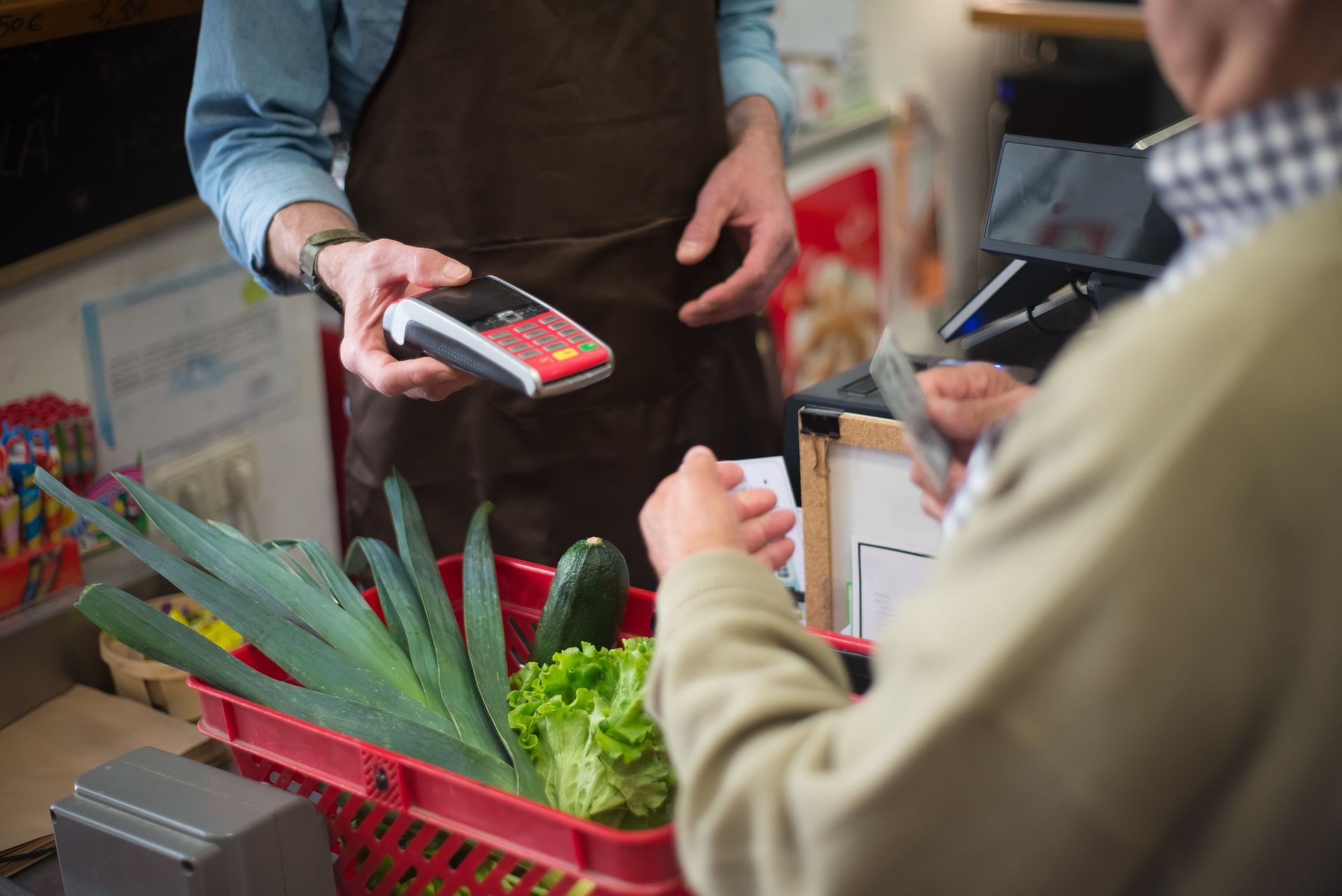
Every festive mission is a fresh chance for a shopper to see your product, or to see a gap where it should be. A big weekly shop is planned. A dash for party nibbles or a last-minute bottle is not, and that's where impulse wins or loses the sale.
Spread six weeks of those trips across a store and the same fixture gets hammered again and again. The brand that's still faced up, full and easy to grab on the fifth visit is the one that gets picked. The brand that's been raided and left messy on the Tuesday after the office party has lost the rest of the week.
We've written before about how immediate consumption is reshaping retail display. Christmas 2026 takes that up a gear: lots of shoppers, lots of trips, small baskets, quick decisions.
Where do festive displays usually go wrong?
They're built for launch day, not week five. The usual problems we see:
- Stock runs down and nobody notices. Product gets pushed to the back of a shelf, the front looks empty, and the shopper walks past.
- Cardboard gives up. Temporary units take a battering in a busy December, and a crumpled FSDU makes a premium product look cheap.
- Planograms drift. Under pressure, staff fill gaps with whatever's to hand. Your agreed space slowly becomes someone else's. (It's a real cost, we covered it in our piece on the planogram compliance profit leak.)
- The display has one job. A unit designed for "Christmas" can't flex between party food, gifting and New Year without a rebuild.
With a third of Christmas spend going through promotions last year, a display that doesn't hold its shape all season is a promotion that underperforms.
How can brands win every festive mission?
Build for repetition. The question isn't "how does it look on day one?", it's "how does it look after the 200th shopper?"
That's what our patented spring-loaded systems are designed for. As each pack is taken, the next one moves up to eye level, so the display stays full-faced without anyone having to touch it. Every shopper on every mission sees a stocked, tidy unit.
A few things that work well for a multi-occasion season:
- Countertop units by the tills for gifting and add-ons: chocolates, premium snacks, miniatures. Our new mini countertop display was made for exactly this kind of grab-and-go purchase.
- Floor-standing towers near party aisles for multipacks and sharing products, where capacity matters because the stock turns fast.
- Re-wrapping rather than replacing. Steel units can take a new graphic for each occasion: party season, Christmas, then New Year and into January. One fixture, several campaigns, nothing heading for the skip on Boxing Day.
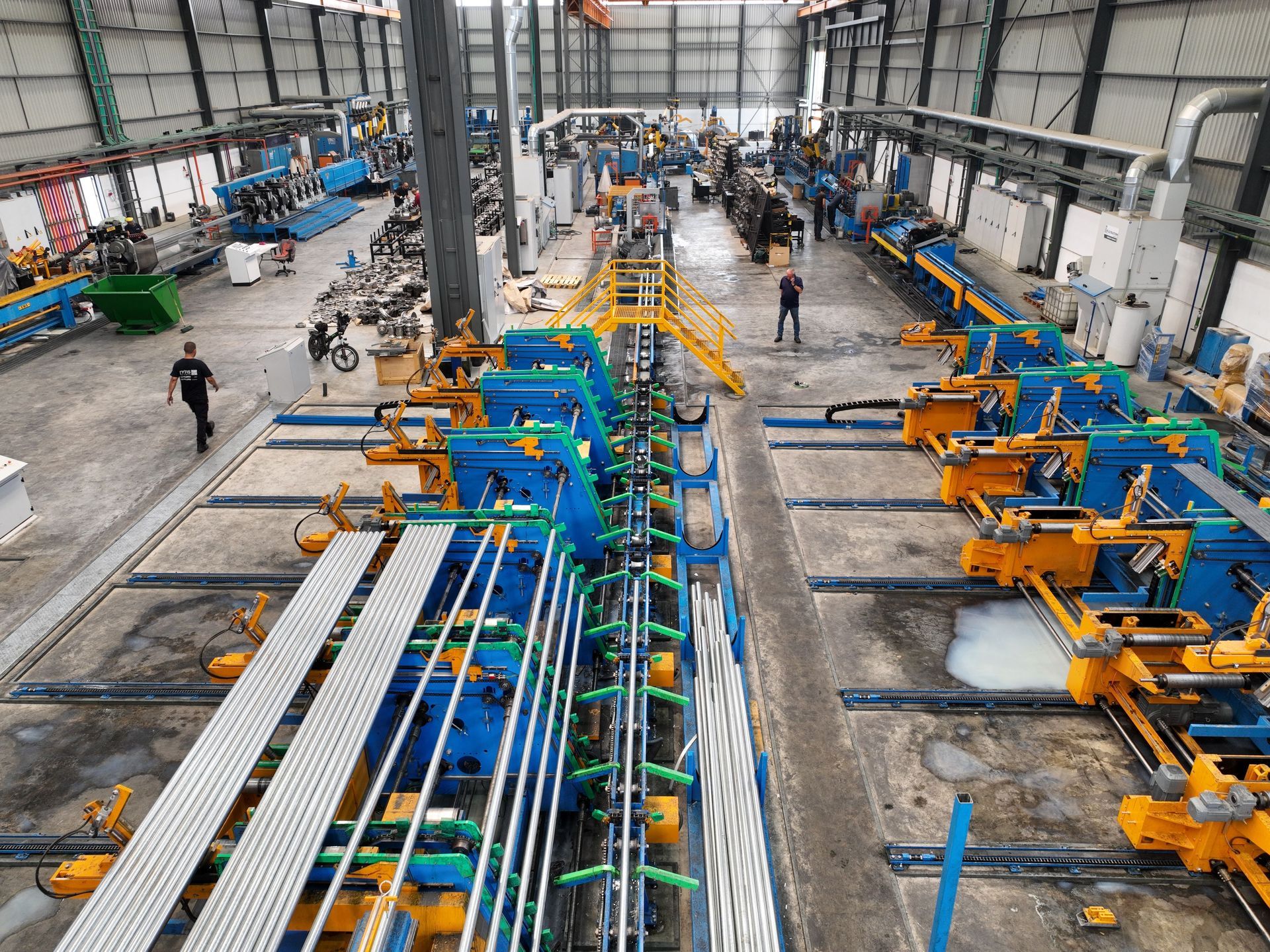
Because everything is made in our own factory in the UK, from robust sheet metal, the units last for years, not for one promotion.
FAQ
When do UK supermarkets launch their Christmas ranges? The major supermarkets revealed their 2026 festive ranges in late September, with Sainsbury's launching 330 new lines on 22 September.
How much do UK shoppers spend on Christmas groceries? Kantar recorded £13.8bn in take-home grocery sales in the four weeks to 28 December 2025, with the average shopper spending £476.
What is Twixmas? Twixmas is the stretch between Christmas and New Year. Retailers increasingly treat it as its own shopping occasion, with ranges for leftovers, grazing and relaxed get-togethers.
Why use a metal display instead of cardboard at Christmas? Metal units hold their shape through heavy footfall, keep products faced up with spring-loaded systems, and can be re-wrapped for each occasion instead of thrown away after one promotion.
Get a Quote
If you want your products stocked, tidy and front-facing from the first party to the last day of Twixmas,
talk to us about a display built for the whole season.
More from the blog